Positive self-talk and visualization are two of the most effective mental techniques speakers use, and they work because of how closely the mind and body are linked — what you tell yourself and picture in your head directly affects your physical state when you’re speaking.
Positive self-talk
This is about consciously managing your internal dialogue instead of letting anxious, automatic thoughts run the show.
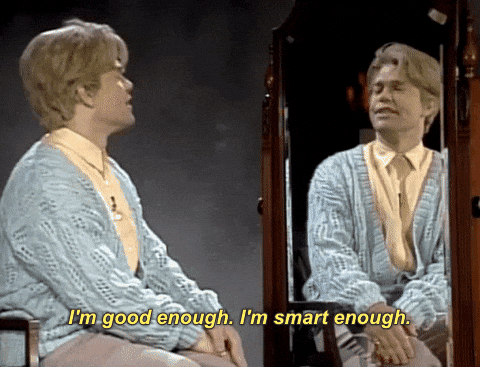
- Catch and replace negative thoughts — Instead of “I’m going to mess this up” or “Everyone can tell I’m nervous,” swap in something realistic and steadying: “I know this material well” or “A little nervous energy means I care about doing this well.”
- Use present-tense, affirming statements — Phrases like “I am prepared” or “I have something valuable to share” tend to work better than vague, over-the-top affirmations, because they feel more believable in the moment.
- Talk to yourself like you’d talk to a friend — Most people would never say to a nervous friend what they say to themselves (“You’re going to blow it”). Applying that same compassion to yourself reduces the harshness that fuels anxiety.
- Use it right before you go on — A short phrase repeated quietly right before stepping up — “I’ve got this,” “One point at a time,” “Breathe and begin” — can interrupt a spiral of nerves right when it matters most.
- Reframe rather than deny — Rather than telling yourself “I’m not nervous,” which the brain doesn’t fully buy, try “This nervous energy will help me perform,” which works with the feeling instead of against it.
Visualization
This is mental rehearsal — picturing the speech going well before it happens, so your brain has a sense of familiarity when the real moment arrives.
- Visualize the whole arc, not just the end — Imagine walking up, starting strong, hitting your key points, handling a tough question smoothly, and finishing with a solid close — not just the applause at the end.
- Engage multiple senses — Picture the room, imagine your voice sounding clear and steady, feel your feet on the ground, hear yourself pause confidently. The more vivid and sensory, the more effective it tends to be.
- Rehearse handling a hiccup, too — Visualizing yourself calmly recovering from a stumble or tech glitch builds confidence that you can handle the unexpected, not just the perfect version of events.
- Do it consistently, not just once — Athletes use visualization repeatedly in the days leading up to a performance, not just minutes before. The same repetition helps speakers build real familiarity with success rather than a one-time pep talk.
- Pair it with physical rehearsal — Visualization works best as a supplement to actually practicing out loud, not a replacement for it — the mental rehearsal reinforces the muscle memory from real practice.
Positive self-talk manages the anxious voice in the moment, while visualization builds a mental blueprint of success ahead of time. Speakers who use both tend to walk into a talk with less raw fear and more of a sense of “I’ve already done this successfully in my head” — which measurably reduces the physical symptoms of anxiety, like a racing heart or shaky voice.